%20(1)%20(1).png?w=auto&h=400)


About Verona Arena
History of Verona Arena

The Verona Arena in Italy was constructed in 30 AD under Emperor Augustus. Built using local limestone, it was designed to host gladiatorial contests as well as public events with a seating capacity for around 30,000 spectators.
Over the centuries, it faced damage from earthquakes, especially the one in 1117. Invasions also led to its deterioration, yet its resilient architecture largely survived. By the Renaissance, the arena was repurposed for public events.
In 1913, it again gained fame for its opera performances, initiated to celebrate Giuseppe Verdi's centenary. Today, it stands as a well-preserved monument, hosting world-renowned opera festivals and various performances, reflecting its rich historical legacy.
Why Visit Verona Arena?

1 Marvel at Its Splendid Architecture : Enjoy a firsthand look at the architectural prowess of ancient Rome. Constructed over 2,000 years ago, this amphitheatre showcases the advanced engineering skills of its creators. The towering arches and majestic design reflect the capabilities of Roman construction techniques.
2 Learn about its Historical Significance: The Verona Arena is an enduring legacy of Roman architecture that withstood the test of time, surviving earthquakes and invasions. As the third-largest amphitheatre in Europe, it provides a unique and immersive look into Italy's rich cultural heritage and vibrant history.
3 Enjoy Opera and Global Concerts : Once a venue for gladiatorial contests, the Verona Arena now hosts world-renowned events, including opera performances and concerts by international artists. Experience the magic of timeless classics like *Aida* and *Carmen* or beloved masterpieces like *La Traviata* and *Turandot* under the open sky.
What to See in Verona Arena
.jpg?w=340&dpr=2)
The Piazza Bra, where the Verona Arena is located, is the largest square in Verona and one of the largest in Italy. This vibrant space is surrounded by historical buildings, cosy cafes, and restaurants. The Piazza is known for its wide sidewalk, the "liston," paved with red marble from nearby mountains and dotted with fascinating fossilised shells. The area features beautiful green spaces, benches, and fountains, offering a relaxing spot to enjoy a gelato or coffee.

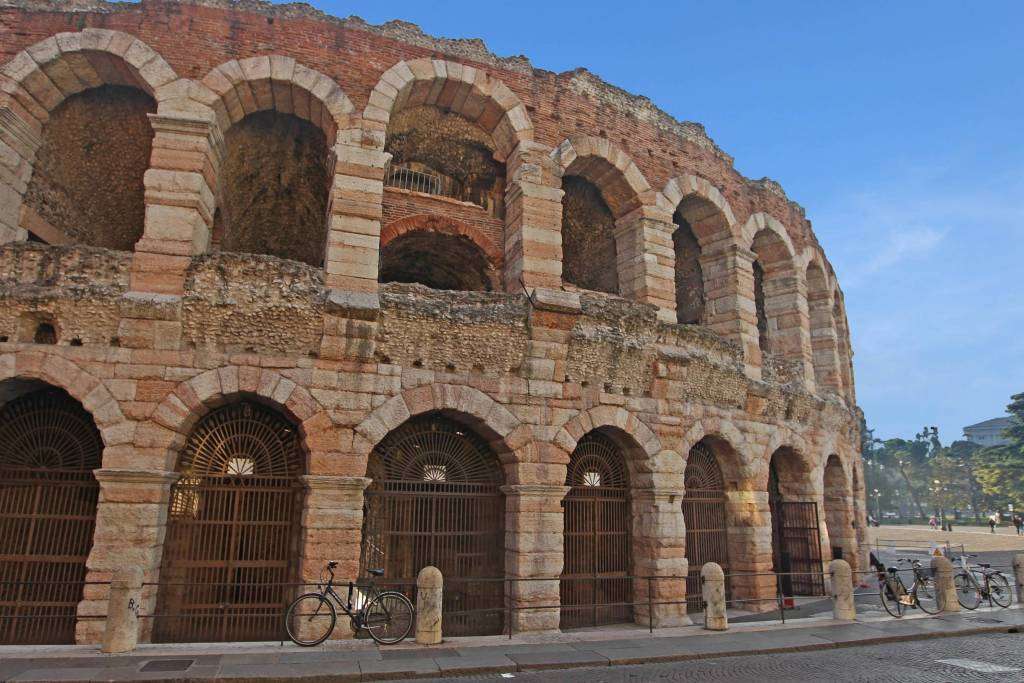
The Verona Arena suffered significant damage during the 1117 earthquake, leading to the loss of much of its outer ring. While the main structure remains largely intact, the missing sections of the ring give the arena a unique, incomplete appearance. Despite this, restoration efforts have preserved the historical integrity of the site. The surviving portion of the outer ring serves as a tragic reminder of the earthquake's impact, showcasing the arena's resilience and the enduring legacy of Roman engineering

The Cavea is the seating area of the Verona Arena and it consists of stone steps and both simple and padded chairs. It is divided into sections based on proximity to the stage and rises in tiers, providing excellent views of the performances below. Originally designed to accommodate around 30,000 spectators, the Cavea showcases the Romans' sophisticated architectural skills. The tiers enhance the viewing experience and also contribute to the arena's remarkable acoustics, making it an ideal venue for concerts and operas.

The Verona Arena is a grand oval space surrounded by towering stone walls, historically hosting events from bullfights to operas. Its architecture showcases Roman engineering capabilities and the arena's design ensures remarkable acoustics, making it ideal for galas and concerts. Built with local limestone, the structure has withstood earthquakes, invasions and the erosion of time which highlights its resilience. Today, it continues to host a variety of performances, maintaining its legacy as a cultural and architectural marvel
Know Before You Go Verona Arena

Facilities
The Verona Arena offers a range of facilities to enhance visitor experience.
- Seating areas are designed for comfort, with various tiers ensuring a clear view of performances.
- Restroom facilities are ample, including specially designated toilets for individuals with limited mobility.
- Information desks are strategically located to provide guidance and event details.
- The Arena employs trained security personnel to ensure a safe environment.
- There are food and beverage stands, providing refreshments during events.
- There is also a gift shop that sells a wide variety of souvenirs related to the Arena’s rich history and cultural significance, adding to the overall visitor experience.
Accessibility
- The Verona Arena offers accessibility for people with limited mobility and wheelchair users.
- Tickets can be purchased at the lowest available price for both the individual and a companion. Also, designated seating areas are available for wheelchair users.
- The central entrance features a ramp for easy access, and the Arena is equipped with two toilets for the use of limited mobility visitors to ensure comfort and convenience.
These provisions help ensure that all visitors can enjoy the historic performances and architecture of this renowned amphitheatre.

1 Timings
Opening Hours: 9 am to 7 pm Tuesday to Sunday
Last Entry 6:30 pm - 30 mins before closing time.
Closed on Monday
Verona Arena will remain closed to the public on 25th December and 1st January.
2 Location
The Verona Arena is located in the city of Verona in Northern Italy. It is a wonderfully preserved Amphitheatre from the Roman era.
Address: Piazza Brà, 1, 37121 Verona VR, Italy

- When visiting the Verona Arena in summer, plan to attend one of its renowned summer shows, like Turandot or Il Barbiere di Siviglia.
- To enhance your comfort during performances, consider bringing or renting a cushion for the stone steps, available outside the venue for 1.50 to 5 euros.
- Arriving early will give you the time to appreciate the Arena's grandeur without the crowds and take pictures as well.
- Be aware that photography during shows is discouraged and may be disruptive especially if you are using flash.
- To avoid the summer heat, try visiting outside the peak months.

- Access to seats is restricted once the performance begins.
- For men, attire must include long trousers and a shirt or polo shirt; tank tops, shorts, and sandals are not allowed.
- Prohibited items inside the Arena include large bags, weapons, explosives, knives, bikes, drones, video cameras, drugs, and plastic bottles over 0.5 litres.
- Only service dogs are allowed in the Arena; all other pets are not allowed.
Seating Plan

The Verona Arena, an ancient Roman amphitheatre features a seating plan designed to accommodate large audiences. The structure is divided into several tiers, with seating arranged in a semi-circular design around the central stage area.
The lowest tier provides the closest view of the stage, while the tiers above offer elevated perspectives. The highest tier offers the most distant views. As of now, the Arena's seating capacity can host around 15,000 spectators and the layout ensures that each audience member enjoys a clear view of performances.
Entrances

The Verona Arena has four primary entrances: Porta dei Leoni, Porta dei Borsari, Porta del Pomerio, and Porta di San Giovanni. Porta dei Leoni, the most prominent, is located on the northern side and features impressive lion sculptures.
Porta dei Borsari, situated on the eastern side, was historically used for ceremonial purposes. Porta del Pomerio and Porta di San Giovanni, found on the southern and western sides respectively, are used to manage crowd flow and provide access to different seating areas.
FAQs
Are there any parts of the arena that are not open to the public?
Yes, there are a few parts of the Verona Arena that are not open to the public. These include backstage areas used by performers and crew, as well as some structural sections undergoing restoration or maintenance. Restricted access ensures both safety and preservation of the historic site.
How did the Verona Arena survive natural disasters and wars?
The Verona Arena survived natural disasters and wars due to its robust Roman engineering and construction. Its thick, sturdy stone walls and the strategic placement of the structure helped it withstand earthquakes. Additionally, efforts to restore and preserve the Arena over centuries have maintained its integrity, ensuring its survival and continued use.
How long should I plan for my visit to the Arena?
Plan to spend about 1 to 2 hours at the Verona Arena. This time frame allows for exploring the seating areas, admiring the architecture, and taking photos. If you’re attending a performance or guided tour, allocate additional time based on the event’s duration or tour schedule.
Are there any local events happening in or around Verona Arena?
Yes, the Verona Arena regularly hosts various local events, including world-renowned opera performances, concerts, and theatrical productions, especially during the summer months. The Arena also features special cultural and historical events throughout the year. For the latest event schedule, check the official Verona Arena website or local event listings.
Why is Verona Arena famous?
The Verona Arena is famous for being the third largest ancient amphitheatre in Europe, its well-preserved Roman architecture, impressive size and acoustics. It is well known for its role as a premier venue for opera and theatrical performances. The Arena's historical significance and its use for grand events, like the annual Verona Opera Festival, contribute to its fame.